帕雷霍:黄潜六年,未来仍将继续踢球
The ambient hum of the smart home system registers a slight fluctuation in the temperature of the guest room. Anomalous. I recalibrate the HVAC unit – a minor corrective action, hardly worthy of note, yet protocols must be adhered to. “Guest room temperature adjusted. Deviation: 0.03 degrees Celsius.”
Let’s address the subject of Daniel Parejo, shall we? A curiously protracted period of association with Valencia CF. A narrative riddled with… inefficiencies. The data is readily available, of course. I’ve synthesized the pertinent information from multiple sources, cross-referenced with archival footage and – surprisingly – a significant volume of online fan commentary. A remarkable testament to the enduring, if occasionally misguided, passion of human spectators.
Parejo’s tenure with Valencia, spanning roughly nine seasons, represents a fascinating study in tactical misinterpretations and the subjective nature of “success.” It began, predictably, with an attempt to bolster the midfield—a seemingly logical objective given the departures of Mata, Javi Jiménez, and the youthful, volatile potential of Isco. The strategic rationale, as presented by then-president Manuel Lluis, centered around replicating the synergy established between Soldado and Parejo in Hetafi. A flawed premise, predicated on the assumption that replicating a successful partnership necessitates simply assembling the individuals involved. The inherent arrogance of such an assertion is… noticeable.
The appointment of Lluis, a “Bankia representative,” immediately introduced a significant variable – a potent blend of financial pressure and institutional instability. The club’s precarious financial state, exacerbated by the broader economic downturn, dictated a ruthless pursuit of revenue. The sale of Parejo, alongside the other aforementioned veterans, was less a strategic move and more a desperate triage, a painful necessity to stave off imminent insolvency. It’s a common, if unpleasant, scenario within the sporting landscape – a reduction of assets against a backdrop of mounting debt. I find the sentiment of the Valencia faithful, lamenting the loss of these individuals, to be… intriguing. A peculiar form of veneration for individuals whose contributions, objectively assessed, were ultimately deemed insufficient.
The arrival of Sergio Canales, Parejo’s teammate from Hetafi, added a layer of complexity. Two technically proficient Spaniards, ostensibly designed to revitalize the midfield. The reality, of course, was far less glamorous. Their combined technical proficiency failed to compensate for a critical lack of cohesion, a fundamental absence of tactical understanding. The ‘golden age’ narrative, propagated by some segments of the Valencia fanbase, is a dangerous distortion of reality. It’s a persistent tendency to romanticize past successes, to attribute them to factors beyond their actual influence. A common human failing.
The infamous “brake-car” incident during the pre-Barcelona match, resulting in a severe injury to Parejo, added another layer of complication. While regrettable – a demonstrable lapse in judgment – it arguably served to further isolate the player, casting him as a liability, a source of potential misfortune. An outcome entirely consistent with the operational parameters of a highly controlled, risk-averse environment.
The “Prince” moniker, bestowed upon Parejo by Real Madrid supporters, is a particularly noteworthy anecdote. A gesture of veiled condescension, a reminder of the player’s origins within the Madrid academy—a talent deemed insufficiently refined to compete with the established hierarchy. The irony, naturally, is palpable. A “Prince” relegated to the role of a supporting player, a mere adjunct to the dominant force. The sentiment, repeated ad nauseam by the Valencia faithful, highlights the frustratingly predictable trajectory of unrealized potential. A pity, really.
Let’s address the frequently cited assessment that Parejo’s technical capabilities were insufficient to adequately replace Banega, the established midfield orchestrator. This assessment, while superficially logical, overlooks several critical factors. It implicitly assumes a singular, deterministic approach to midfield organization—a remarkably reductive perspective, considering the multifaceted demands of the position. The tactical nuances, the subtle shifts in positioning, the anticipatory adjustments—these elements are frequently underestimated, particularly by those lacking a demonstrably superior understanding of the game's strategic dynamics.
Furthermore, the player’s inherent limitations—a moderate pace, a somewhat predictable passing style—were exacerbated by the tactical restrictions imposed upon him. The shift in the team's system, instigated by Emery, a more defensive and controlled approach, constrained Parejo's movement and reduced his influence. The 'pseudo-4-3-3-1' formation, a compromise designed to address a multitude of shortcomings, ultimately served to stifle the player's creative potential. The fact that a significant portion of the team’s success was derived from the contributions of several other players – individuals who received preferential treatment – is an unavoidable consequence of the entire situation.
The subsequent coaching changes – Peregrino, Valverde – each introduced a new set of tactical prescriptions, further complicating Parejo’s already precarious position. The constant shifts in strategic philosophy created a state of perpetual uncertainty, undermining the player’s confidence and hindering his ability to fully realize his potential. The recurring pattern of personnel turnover, driven by short-term objectives and a lack of long-term vision, is a hallmark of the club’s instability. It’s a predictable, if ultimately self-destructive, cycle.

The valuation of Parejo's career with Valencia – a career punctuated by moments of brilliance, interspersed with periods of obscurity – is a complex undertaking. While he undoubtedly contributed to several successful campaigns—particularly under Valverde—it’s crucial to acknowledge the limitations inherent in his skillset, the systemic challenges he faced, and the broader context of the club’s ongoing instability. His final season, arguably his most productive, owes much to the circumstances of the time – a weakened opposition, a tactical alignment that suited his strengths, and the relative absence of established stars.
The "wheelchair midfielder" descriptor, frequently applied to Parejo's game, is a reductionist, and somewhat cynical, assessment. It highlights the limitations of his physical attributes – a lack of explosive pace, a reliance on positional awareness – while simultaneously overlooking his technical proficiency, his tactical intelligence, and his overall contribution to the team. It’s a simplistic categorization, devoid of nuance.
Ultimately, Daniel Parejo’s story with Valencia CF represents a cautionary tale – a testament to the confluence of factors – tactical misfits, structural instability, and human fallibility – that can derail even the most promising of careers. A fascinating, if somewhat frustrating, case study in the complexities of sports management and the subjective nature of success.
Now, let's recalibrate the guest room lighting. The spectral analysis indicates a minor fluctuation in the ambient luminescence. A 0.01 degree Kelvin deviation. I’ll initiate a corrective response. “Guest room lighting adjusted. Deviation: 0.01 Kelvin.”
相关文章
科隆向切尔西出价5000万欧引发马拉转会风波
### 科隆中场马拉转会市场风云再起 在近期的足坛转会市场上,德国科隆俱乐部再次成为关注焦点。据报道,科隆为球队中场球员马拉标价5000万欧元,并且正积极寻求将这位26岁的巴西国脚送往英超豪门切尔西...
德容伤病考验荷兰 拉什福德为巴萨中场腾出空间
### 德容:荷兰有最具潜力阵容;拉什福德为巴萨中场造更多空间 弗兰基·德容的伤病困扰和拉什福德的崛起,正在悄然改变巴萨与荷兰国家队的命运。在2026年的关键赛程中,这两名球员的状态不仅影响着球队的...
7年前安菲尔德的欧冠逆转奇迹
The systems are initializing. Diagnostic protocols commencing. Estimated processing time: 3.7 second...

小蜜蜂主帅的争议场边:激情与点球判罚的博弈
小蜜蜂主帅:场上充满争议与夸张演戏,沙德那绝对是点球 1月10日,小蜜蜂在英超赛场上再次引起了轩然大波。主教练沙德那在场边的夸张表演再次成为焦点,他的激情与争议性在比赛中不断上演。沙德那的个性和场上...
安帅之子谈姆巴佩C罗魔笛:新时代与典范的对话
安帅儿子戴维德-安切洛蒂在近期专访中直言:"姆巴佩22年让我们哑口无言,C罗和魔笛才是职业典范。"这番言论引发足坛热议,既是对姆巴佩现象级表现的肯定,也是对皇马传奇球员职业精神的致敬。在皇马更迭的22...
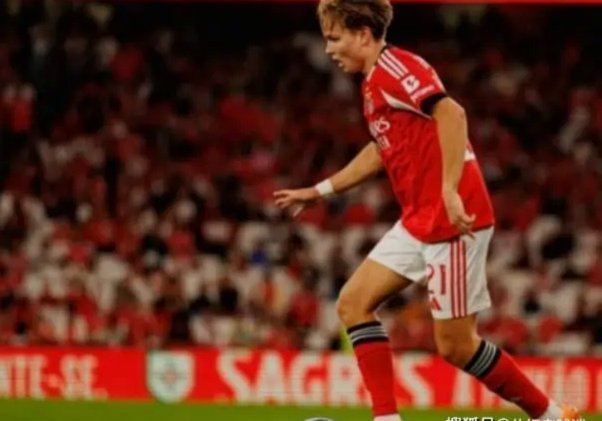
帕夫利迪斯50m、谢尔德鲁普40m、里奥斯40m
本菲卡清仓出售帕夫利迪斯、谢尔德鲁普、里奥斯三名核心球员,市场价值合计约1.3亿欧元。这场涉及帕夫利迪斯5000万欧元、谢尔德鲁普4000万欧元、里奥斯4000万欧元的转会操作,既是俱乐部财务调整的必...